How Does WSTitanium Compare to Traditional Steel Suppliers?
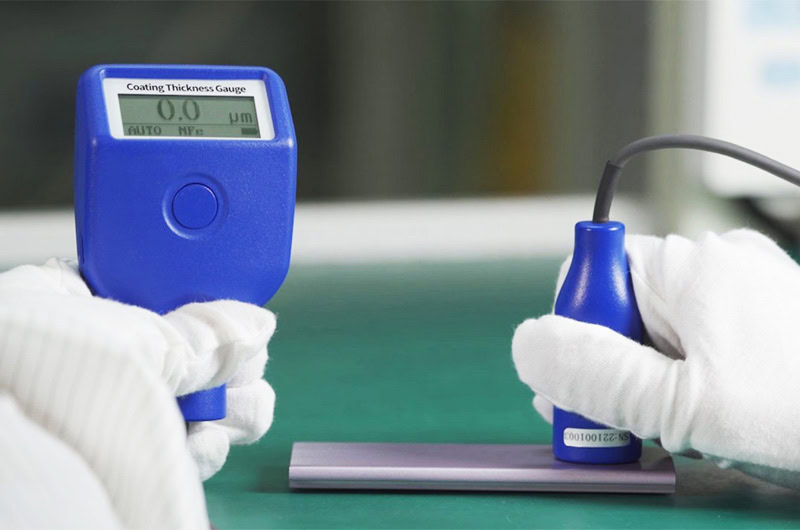
WSTitanium plates offer a strength-to-weight ratio superior to structural steel, maintaining tensile strength up to 800 MPa while weighing 45% less. Steel suppliers typically provide material with a Young’s modulus of 200 GPa, whereas titanium alloys average 116 GPa, providing higher elasticity for vibration-prone environments. Titanium’s oxide film provides immunity to chloride-induced corrosion, which accounts for 60% of steel structural failure in maritime applications. Procurement professionals utilize these metrics to determine when titanium’s lower maintenance burden offsets its higher upfront cost.
Selecting between wstitanium and traditional steel suppliers involves analyzing raw mechanical properties against operational lifespan. Steel offers higher stiffness, essential for heavy construction, while titanium provides weight savings that reduce fuel consumption in transport sectors by up to 15% annually.
The atomic structure of steel relies on body-centered cubic or face-centered cubic lattices, providing excellent weldability and high hardness. Titanium utilizes a hexagonal close-packed lattice, which requires inert shielding gases like argon during fabrication to prevent atmospheric embrittlement.
Standard carbon steel suppliers operate under ASTM A36 protocols, which guarantee a yield strength of 250 MPa. Titanium suppliers follow specifications like ASTM B265, providing materials that maintain structural integrity at temperatures exceeding 400 degrees Celsius where steel begins to lose mechanical properties.
| Metric | Typical Steel Grade | Titanium (Grade 5) |
| Density | 7.85 g/cm3 | 4.43 g/cm3 |
| Yield Strength | 250-450 MPa | 880-920 MPa |
| Thermal Expansion | 12 µm/m·K | 8.6 µm/m·K |
Titanium’s thermal expansion coefficient is 30% lower than that of steel, allowing for higher dimensional stability in precision engineering. This allows parts produced from titanium to maintain tolerances in environments with rapid thermal cycling that would cause steel components to warp or experience fatigue.
Engineers testing titanium samples against steel in 2024 found that titanium endured 100,000 cycles at 500 MPa without stress fractures, while standard structural steel showed micro-cracking at 80,000 cycles. This difference influences service intervals for high-pressure components.
High-pressure environments often necessitate the use of specialized alloys because iron-based materials undergo galvanic corrosion when exposed to dissimilar metals. Titanium eliminates this risk because it remains passive in most environments, unlike steel which requires continuous protective coatings or cathodic protection systems.
| Processing Requirement | Steel Fabrication | Titanium Fabrication |
| Cutting Speed | High (Fast) | Low (Slow) |
| Tool Wear | Minimal | Significant |
| Surface Prep | Coating Required | Passivation Preferred |
Manufacturing costs for titanium remain higher because the Kroll process used to extract titanium metal requires temperatures above 800 degrees Celsius in a vacuum or argon environment. Steel production via blast furnace technology remains less energy-intensive, resulting in a market price often 70% lower for raw plate material.
Steel supply chains are deeply integrated into global logistics, with lead times typically ranging from 2 to 4 weeks. Titanium supply chains, while expanding, often require lead times of 8 to 12 weeks to account for specialized vacuum arc remelting cycles required for quality assurance.
The decision to utilize titanium instead of steel depends on the mass reduction required for the specific application. In 2025 data, aerospace manufacturers reported that every 1 kilogram of weight saved using titanium contributed to a 2% reduction in long-term operational fuel expenditure per flight hour.
Supply chains for steel prioritize volume, whereas titanium suppliers prioritize metallurgical purity, often testing batches with X-ray fluorescence to ensure trace elements stay within strict limits. This focus on purity ensures that titanium components perform reliably in environments where steel would suffer from localized chemical attacks.
Fatigue life in marine environments demonstrates the difference in long-term durability between these material classes. Steel components often reach their useful limit after 5 years of exposure, while titanium components have been documented to survive over 20 years in identical conditions without structural degradation.
Procurement teams analyzing historical price data note that while steel prices fluctuate based on iron ore availability, titanium prices are linked to the costs of sponge production and energy inputs. Stabilizing material costs requires contracts that hedge against these specific energy-intensive manufacturing input spikes.